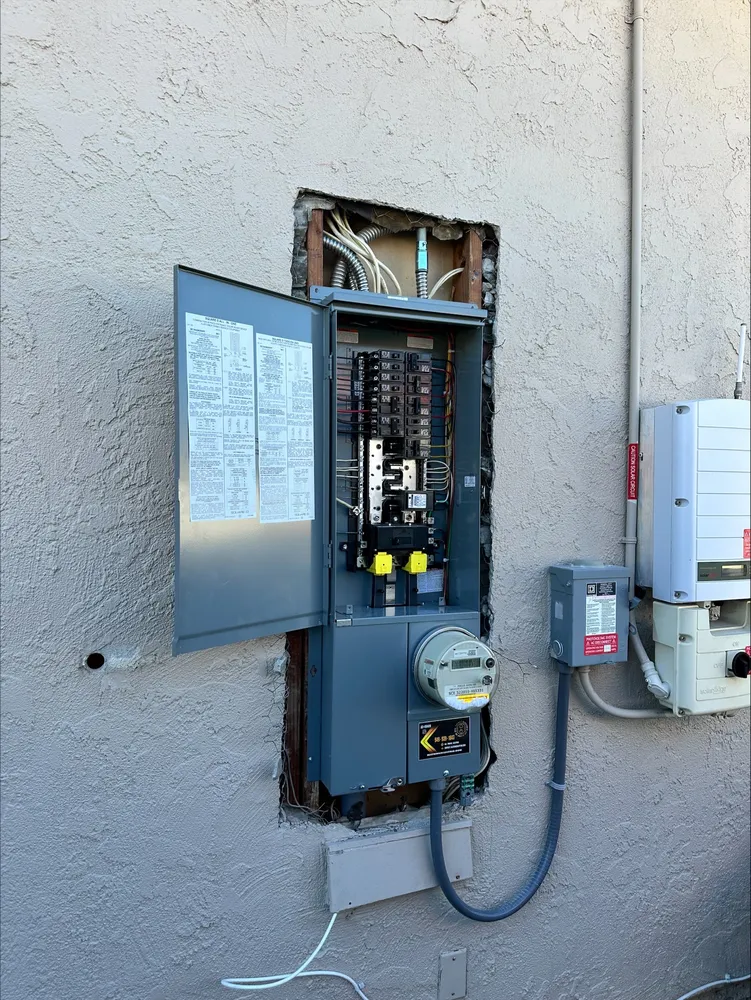
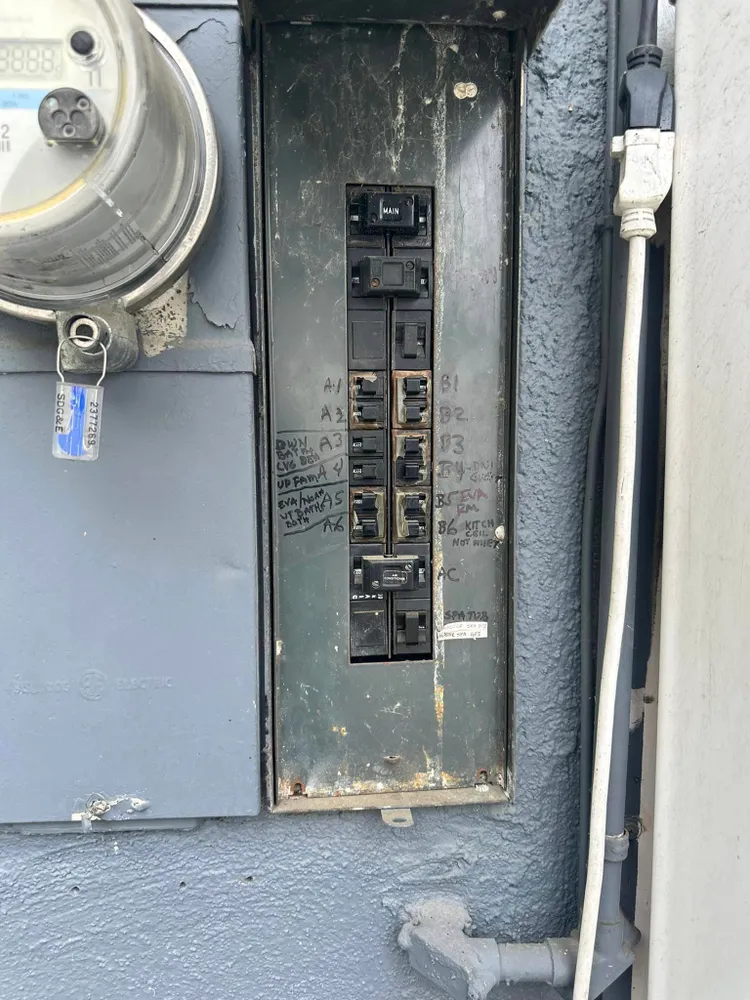
The warning signs that matter most
The signs worth your attention are heat, smell, sound, scorch marks, rust, double-tapped breakers, repeated trips, and whole-house flickering. Each sits somewhere between normal wear and a real hazard, and the trick is knowing which is which so you neither panic over nothing nor ignore a fire risk. Panels are all we do across South Orange County, and most of what scares homeowners turns out to be fine. A few genuinely are not. We will walk through every sign, then sort them into emergencies versus things to schedule.
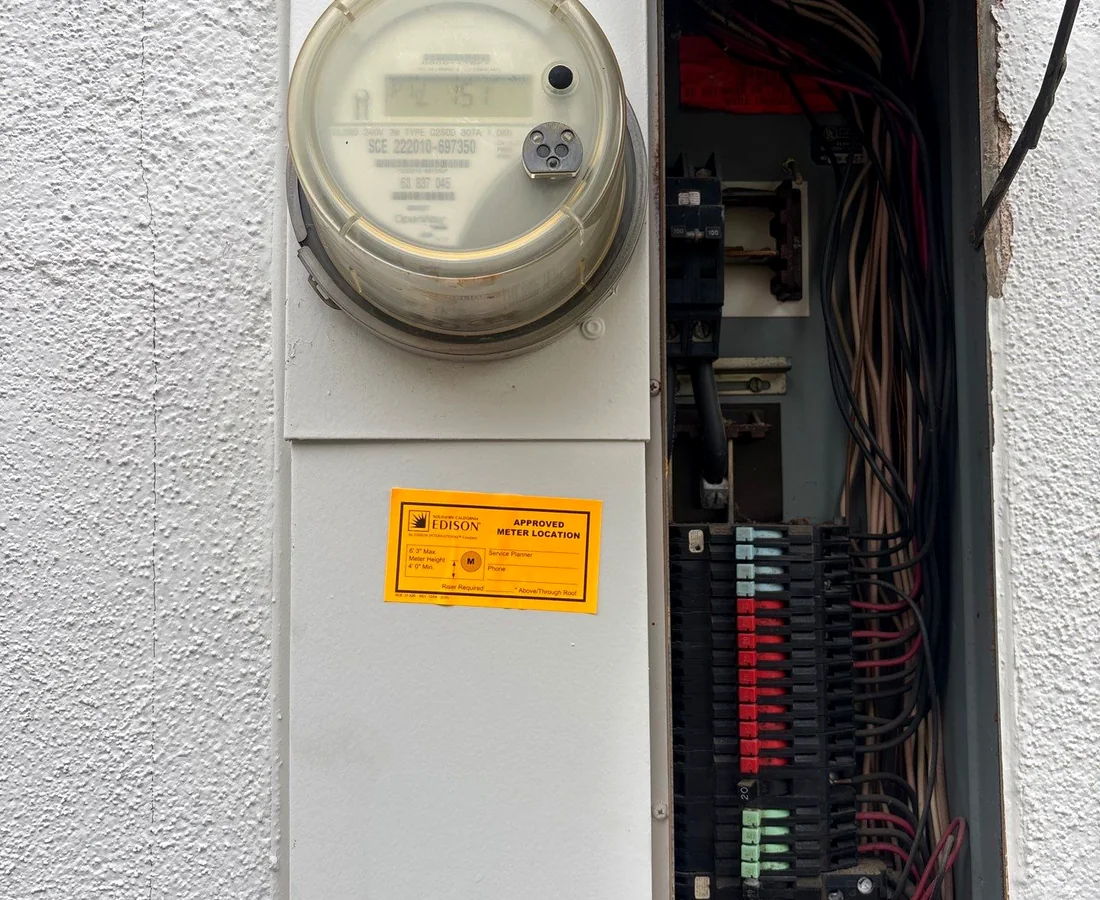
A warm panel can be fine, a hot panel is not
A panel that is slightly warm when a lot of load is running can be normal, but a cover that is hot to the touch, or a single breaker noticeably hotter than its neighbors, is dangerous and needs same-day attention. Some heat from resistance is expected under heavy load, but the metal cover should never be more than barely warm.
When a panel gets genuinely hot, it usually means a loose connection at a lug or terminal. A loose connection creates resistance, resistance creates heat, and heat at a connection is a leading precursor to a panel fire. An overloaded circuit or a failing breaker that can no longer trip can do it too, and a single hot breaker in a row of cool ones is a classic tell. The parts inside are energized, so tightening a lug is licensed-electrician work. Do not open the panel, and if the cover or a breaker is hot, treat it as urgent.
Book a free on-site assessment. We give you a straight answer and a flat-rate price in writing, with no obligation.
Burning smells, buzzing, rust, and scorch marks
A burning-plastic smell, a buzzing sound, scorch marks, or heavy corrosion all mean overheating or arcing, and none is normal.
A burning-plastic or fishy smell
There is no normal version of this smell from your panel. Burning plastic means insulation or components are melting, and a persistent fishy or urine-like odor is overheating insulation off-gassing, a recognized pre-fire warning sign. If you smell either near the panel, shut off the affected circuit, or the main if unsure, and call for help. We go deeper in our guide on what a burning smell from your panel really means.
Buzzing, humming, crackling, or sizzling
A healthy panel is essentially silent. Buzzing, crackling, or sizzling usually means arcing, which is electricity jumping a gap at a loose or corroded connection, and arcing is an active ignition source, so this one is an emergency.
Scorch marks, discoloration, or melted parts
Browning or blackening around breakers, a melted breaker face, or a charred deadfront means the panel has already overheated at least once, and that damage does not undo itself. Treat it as an emergency, keep the cover closed, and replace the panel.
Rust and corrosion, the South OC special
A tiny speck of surface rust on a screw is cosmetic, but rust streaks, white powdery residue, or green deposits inside or around the panel, meter, or service mast are not. Corrosion seizes breakers so they cannot trip, eats the bus bars, and lets moisture reach live parts. Early surface corrosion can be scheduled, while heavy corrosion with any moisture or heat moves up the list. This matters more here than almost anywhere, because a painted-steel panel that might last around 30 years inland can corrode through in roughly half that time near the water in Dana Point or Laguna Beach. Corrosion-resistant equipment is worth asking about close to the ocean.
Double-tapped breakers
A few specific breakers are listed to accept two wires under one terminal, and when the breaker is rated for it, that is fine. Most are listed for one wire only. Two wires under a single-rated screw pinches one and leaves the other loose, which arcs and overheats, and it usually means a full panel was made to fit more circuits than it should. Quiet and cool, schedule it. Hot or buzzing, it is an emergency.
Flickering lights and breakers that keep tripping
One flickering fixture is almost always a bad bulb or a failing dimmer, so check those before you worry about the panel. Whole-house flickering is the panel-level concern. When the entire house dims or pulses, especially as a big appliance kicks on, that points to a problem at the panel or service entrance, often a loose neutral. A loose main neutral makes voltage swing, which can spike your outlets, fry electronics, and lead to arcing, so it is urgent.
Breaker trips work the same way. A breaker that trips once in a while when you genuinely overload a circuit, say a space heater and a microwave on the same line, is protecting you exactly as designed, and if you reset it once and it holds, you are fine. The warning signs are a breaker that trips repeatedly, trips with little or no load, trips and feels hot, or will not reset, which can mean a short, a failing breaker, or a maxed-out panel.
Which signs are emergencies and which can wait
Some signs mean shut it down and call today, and others are fine to put on the calendar. Anything with active heat, smell, sound, or whole-house voltage swings is a same-day issue. Cosmetic or low-grade signs can be scheduled.
| Warning sign | Emergency now | Schedule an inspection |
|---|---|---|
| Hot panel cover or one hot breaker | Yes | Only if faintly warm under heavy load with no smell or sound |
| Burning-plastic or fishy smell | Yes | No |
| Buzzing, crackling, or sizzling | Yes | No |
| Scorch marks or melted parts | Yes | No |
| Whole-house flickering or pulsing | Yes | No |
| Rust or corrosion | If heavy, with moisture or heat | Early surface corrosion |
| Repeated breaker trips | If paired with heat, smell, or buzzing | Repeated trips with no heat or odor |
| Double-tapped breaker | If hot or buzzing | Quiet and cool |
| Single flickering bulb | No | DIY bulb or dimmer swap first |
| Fuse box or obsolete panel | No, unless other signs present | Yes, plan a replacement |
Fuse boxes and older problem-brand panels land in the schedule column. A screw-in fuse box is obsolete and often defeated by oversized fuses that remove the overload protection entirely, and Federal Pacific Stab-Lok and Zinsco panels show up on insurer and inspector do-not-use lists. None is an active emergency on its own, but the insurance and resale pressure makes them worth handling sooner. We cover the specifics in our deep dive on why insurers keep flagging Federal Pacific and Zinsco panels.
How old is too old, and what it means for insurance
Most residential panels last about 25 to 40 years, but age alone is not a reason to rip out a healthy panel. Age plus any warning sign above, or an obsolete brand, is the real trigger, so treat that range as a defensible window, not a hard expiration date. As a panel passes 25 years, components degrade and modern load far outruns what older panels were sized for. A panel that was plenty for a fridge and a few TVs is now feeding an EV charger, a heat pump, and maybe an ADU, and much of South OC housing stock is 1960s to 1990s tract homes running original panels under that strain. If you are wondering whether yours is big enough, see our guide on whether your home needs a 200-amp panel. Near salt water, painted-steel equipment can fail in roughly half the inland span, so a 20-year-old panel near the beach can look worse than a 35-year-old one inland.
The insurance and home-sale angle
Here is where a lot of articles get it wrong. Many California insurers will decline, non-renew, or cancel coverage, or exclude electrical-fire damage, on homes with fuse boxes, FPE Stab-Lok, or Zinsco panels, and they generally require a full replacement rather than a partial repair. Those panels and visible symptoms like rust, scorching, or double-taps also get flagged on the buyer's inspection and can stall escrow. Two corrections to common claims. There was no formal recall of FPE or Zinsco panels by the U.S. Consumer Product Safety Commission (the CPSC). They sit on do-not-use lists with documented field-failure concerns, but neither was officially recalled. And California SB 382, effective January 1, 2026, is a seller-disclosure law, not a replacement mandate. It only asks sellers to disclose that a professional electrical inspection may be advisable and that faulty wiring is a fire risk. It does not name any brand, does not require an inspection or replacement, and it exempts homes sold within three years of their certificate of occupancy. Starting in 2026, your panel's condition becomes a formal disclosure to buyers.
Your homeowners insurance generally will not pay to replace an old or failing panel proactively. Carriers may require the replacement to keep coverage, but they typically only pay for covered sudden damage. If you do replace, real South Orange County jobs generally land between $2,500 and $6,500, with most full 200-amp upgrades around $4,000 to $6,000, plus permits and any wiring corrections. That is a planning range, not a quote.
What to do right now if you see a serious sign
If you are looking at a hot panel, smelling burning, hearing buzzing, or watching the house dim, follow this order.
- Do not open the panel or touch or tighten anything inside. Energized work belongs to a licensed electrician.
- Shut off the affected breaker, or the main breaker if you are not sure which circuit, only with dry hands on a dry floor and no heat or smoke at the main itself.
- Unplug high-draw devices on the suspected circuits if you can reach them safely.
- Call a licensed electrician for emergency service. We dispatch urgent across South OC.
- If there is smoke, flame, sparks, or the smell is intensifying, leave the house and call 911. Never fight an electrical fire with water.
For the non-emergency signs, a single flickering bulb, light surface rust, an occasional justified trip, or an obsolete but quiet panel, you do not need to cut power. Book an assessment and handle it on your schedule. The National Fire Protection Association (the NFPA) keeps good electrical-safety guidance for homeowners.
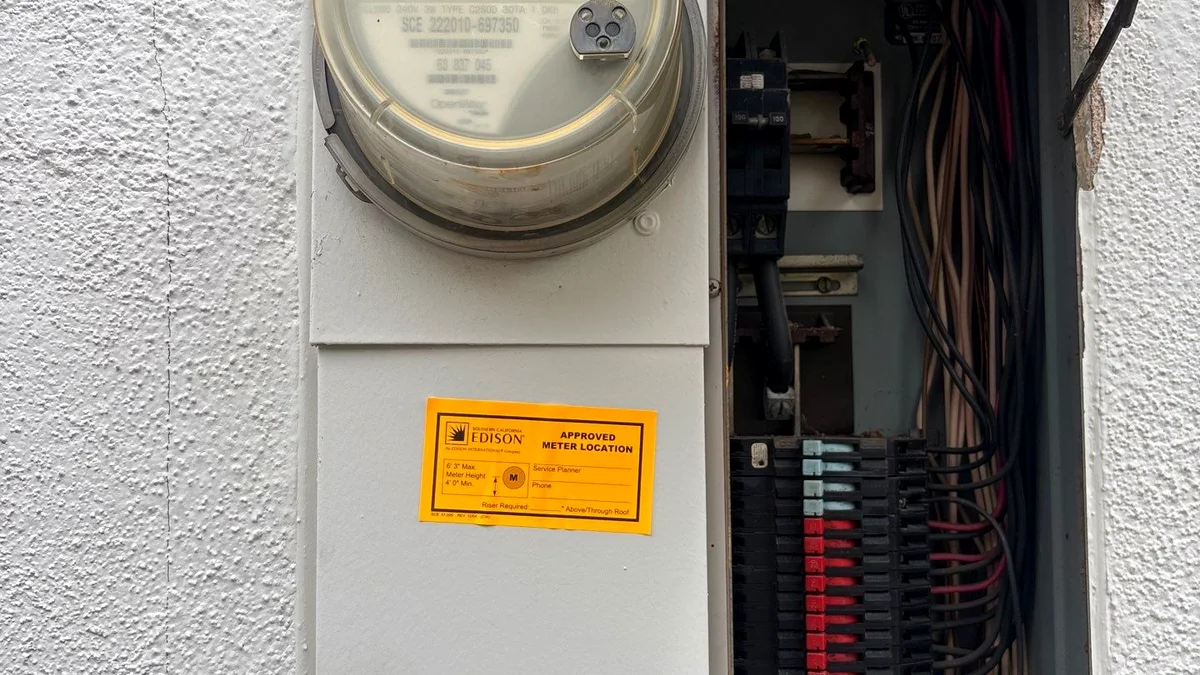
We are a family-owned, C-10 licensed contractor (CSLB #1084610), insured and bonded, serving South Orange County. We give flat-rate quotes in writing, finish most 200-amp upgrades in a single day, and handle the permit, inspection, and Edison meter release. See our services or current pricing. Seeing a warning sign on your box? Book a free assessment or call (949) 799-2034. We keep it lit.