The Straight Answer Is Probably, but the Math Decides
If your South Orange County home was built in the 1960s through the 1980s and still runs on its original 100-amp service or an old fuse box, and you want to add an EV charger, heat pump, central AC, or electric range, then yes, a 200-amp panel is usually the right move. The honest part is that no electrician can know for sure from your driveway, because the decision comes from a service load calculation, not a guess.
The number on your panel is its capacity, not what your house pulls. A home labeled 100 amps almost never draws a steady 100 amps, because your dryer, oven, AC, and water heater are basically never maxed at the same instant. The National Electrical Code lets a licensed electrician discount that total using demand factors. The real question is not how big your panel is, it is how close your true peak demand sits to what the panel can safely carry once you add the loads you want.
We are The Panel Pros, the panel-only division of All Thingz Electric, serving Aliso Viejo, Mission Viejo, Lake Forest, Dana Point, San Clemente, and the rest of South OC.
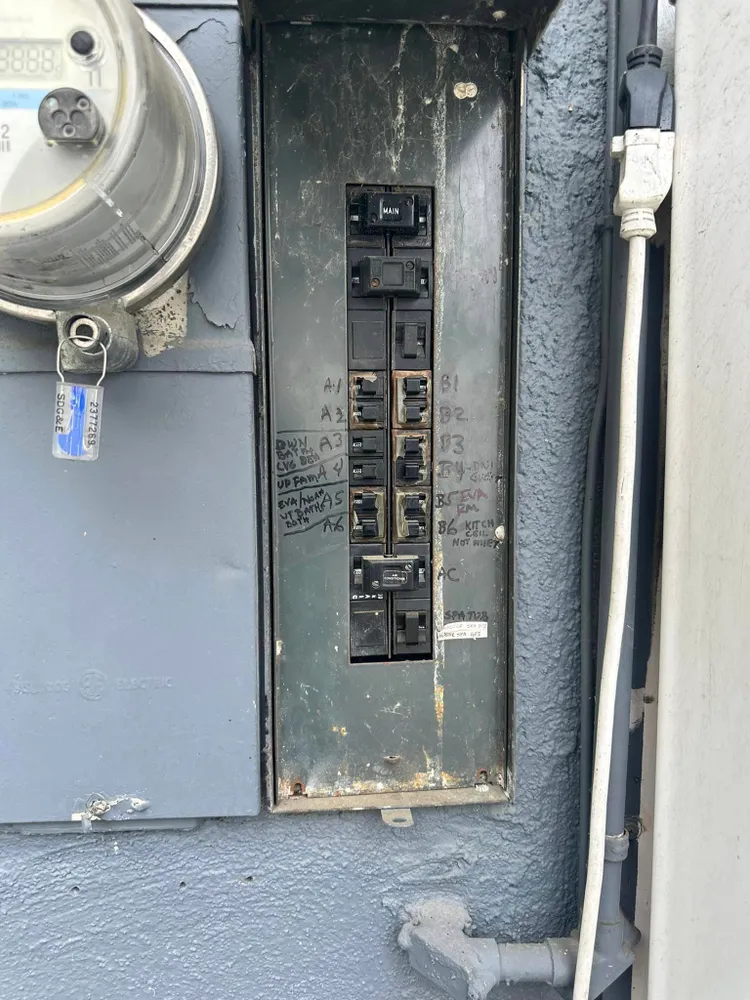
Warning Signs Your 100-Amp Service Is Maxed Out
Most maxed-out panels announce themselves before they fail. The symptoms split into capacity (you ran out of power) and safety (the panel is unsafe no matter its size).
You ran out of room
- Breakers trip when two big things run at once, like the AC kicking on while the oven heats. Repeated trips under combined load mean your demand is bumping the limit.
- No open breaker slots, or "double-tapped" breakers (two wires under one breaker rated for a single wire). Someone already ran out of space.
- Lights dim or flicker when a large appliance starts, a voltage drop from a big motor pulling more than the service comfortably delivers.
- You lean on extension cords and power strips for permanent loads, or keep robbing one circuit to feed another.
The panel itself is a hazard
These can justify a replacement even where capacity is fine.
- A fuse box instead of breakers. Fuse boxes were not built for modern loads and get misused (oversized or bypassed fuses). That is real fire risk, and a common reason an insurer balks.
- Anything warm to the touch, plus buzzing, crackling, or a burning-plastic smell. These point to overheating or loose connections, so shut it off at the main and call us the same day.
- Known-defective brands, Federal Pacific Electric (FPE) "Stab-Lok" and Zinsco. Independent testing has found FPE Stab-Lok breakers can fail to trip during an overload at alarming rates. We cover the history and insurance angle in our Federal Pacific and Zinsco guide.
Many California insurers restrict or decline coverage on homes with a fuse box or a Federal Pacific or Zinsco panel, and some require an upgrade to keep the policy active. To be precise, the Consumer Product Safety Commission closed its FPE investigation in 1983 without a formal recall, so it is not accurate to call these panels "government-recalled." The honest framing is that they are widely regarded as a fire hazard and are often uninsurable. If your carrier flagged your panel, that is a concrete reason to act.
How a Good Electrician Actually Decides
We do not count your appliances and guess. We run a service load calculation under NEC Article 220. For an existing home we usually use the optional method (NEC 220.82, or 220.83 when adding load), built for homes on a single 120/240-volt service rated 100 amps or more. It counts the first 10 kVA of general load at 100 percent, applies a 40 percent demand factor above that, then adds heating and cooling.
That 40 percent factor is why your panel label overstates your real demand. It captures the fact that your house never runs everything at full tilt at once, so your true peak is usually far below the rating. The calculation, not the sticker, tells us whether you have actually run out.
One rule matters for EV chargers. A "continuous load" runs at full current for three hours or more, and code sizes the service at 125 percent of it, so a 48-amp charger is treated as 60 amps.
Book a free on-site assessment. We give you a straight answer and a flat-rate price in writing, with no obligation.
What Triggers an Upgrade Today Is Electrification
The modern driver is electrification, meaning you trade gas appliances for electric ones and plug in cars. Each is a large, sustained draw:
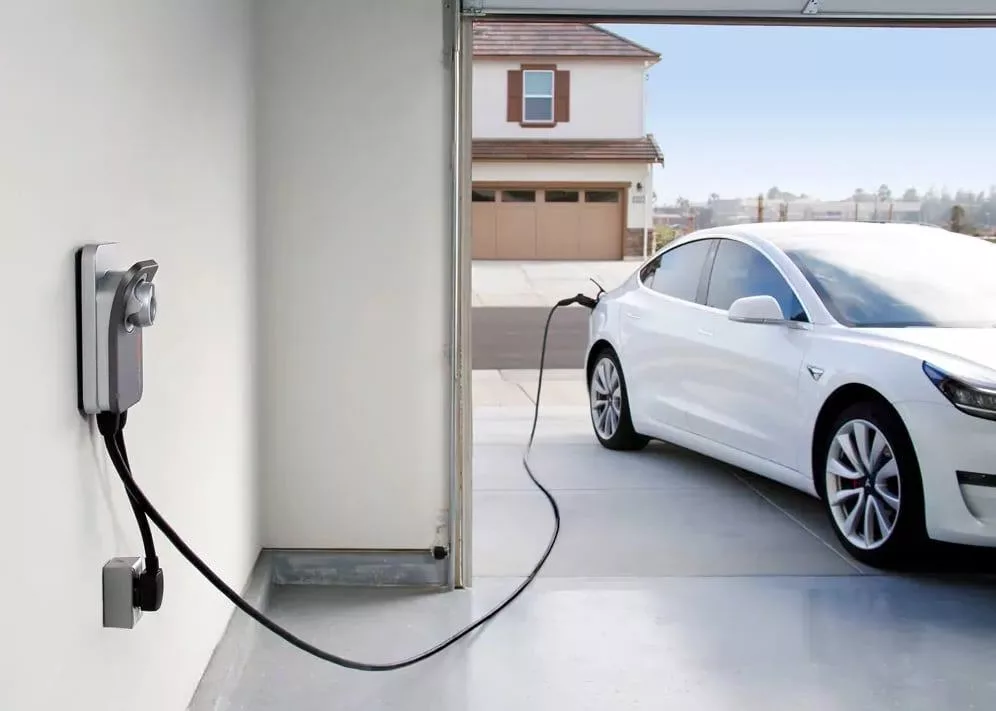
- A Level 2 EV charger is commonly a 40A or 48A circuit, treated as continuous (multiply by 1.25), while Level 1 charging on a 120-volt outlet adds essentially no large circuit.
- Heat-pump HVAC typically runs 30 to 50 amps.
- A heat-pump water heater is usually a 240-volt 30-amp unit, though 120-volt 15-amp models free up panel space.
- An induction range usually runs 240-volt on a 40 to 50 amp circuit.
- An ADU brings a whole second dwelling's worth of load, often on its own subpanel, and is frequently the tipping point.
- Pools, spas, and hot tubs bring pumps, heaters, and 240-volt spa packs that all add significant load.
It is usually the combination that pushes a 100-amp service over the edge, not any one item.
Service Sizes and Who Needs What
200-amp is the modern default for most single-family homes, but it is not the only option. Treat this as guidance, not a substitute for your load calc.
| Service size | Best fit |
|---|---|
| 100A | The code minimum for a single-family home (NEC 230.79). Fine where heating, cooking, water heating, and drying are gas. |
| 125A | A modest step up for extra headroom. Less common, since many South OC homes simply go to 200A. |
| 200A | The modern standard. Typical for 2,500 to 4,000 square foot homes with multiple electric appliances, or any home that is electrifying. |
| 400A | Large or luxury homes, multiple HVAC systems, pool plus spa plus EVs, or a main house plus an ADU. |
When 100-Amp Is Fine (We Will Tell You)
Sometimes the right call is to leave your 100-amp service alone for now. This is where we earn the job by not overselling it.
You stayed gas-heavy. If your furnace, water heater, range, and dryer are all still gas and the load calc shows headroom, your service can stay put.
You can electrify a lot on 100 amps with planning. The tools that make it work:
- Load-managing EV chargers that pause or dial back charging when the rest of the house is drawing hard. Even one limited to around 16 amps adds roughly 80 to 100 miles of range over an overnight charge, enough for most daily driving.
- Circuit-sharing devices (smart splitters), usually a few hundred dollars, that let a dryer and an EV charger share one 240-volt circuit so they never run at once.
- Lower-amperage appliances, like a 120-volt heat-pump water heater, that sip power and leave panel space free.
An EV energy management system can avoid an upgrade for charging. NEC 625.42 lets a listed system (an EVEMS) limit the charger's current based on your real-time load, so a charger can sometimes go on a panel that would otherwise fail the standard calc. See our guide on getting your panel EV-ready before a charger install.
Before you upgrade just to add a charger, ask us to model a load-managing charger or an EVEMS first. On many South OC homes that one decision saves the whole cost. On the code side, a 2026 NEC update makes managed charging even easier, but California's code runs a year or more behind the national NEC, so we confirm the code year your city enforces before promising anything.
Cost, Permits, and the SCE Process
A straightforward 100-to-200 amp upgrade is frequently a one-day job, but plan for permit and utility lead time. Site conditions move the price a lot, so we quote ranges and give you a flat-rate number in writing after a free assessment. These are typical 2025 to 2026 Southern California ranges, drawn from aggregated contractor pricing, not a formal survey:
- A clean panel swap in the same location with sound wiring lands in the low-to-mid four figures.
- An all-in upgrade with permits, a new meter base and service equipment, and minor code fixes runs higher.
- Relocating the panel to meet code, say to a compliant outdoor spot, adds more, and difficult retrofits with old or underground wiring climb well past that.
South OC labor rates and coastal-permit nuances push numbers toward the upper half of any published range, so a single figure off the internet is not worth much.
The upgrade requires a city or county building permit and coordination with Southern California Edison (SCE). It is illegal to cut SCE's meter seal, so only SCE may disconnect and reconnect your power. The flow:
- We pull the permit and schedule the inspection.
- SCE pulls the meter in the morning, we swap the panel and service equipment, and the city inspector signs off.
- SCE re-energizes, often by that evening for a like-for-like upgrade.
The longer pole is scheduling, since permit issuance plus SCE and inspection coordination can add days to a couple of weeks by jurisdiction. We handle all of it for you.
One more South OC reality is that coastal salt air near Laguna Beach and the coastal edges of Mission Viejo and Lake Forest accelerates corrosion of meter sockets, panel cans, and bus bars, and corroded connections create heat and arcing over time. Near the coast we spec a corrosion-resistant outdoor enclosure.
Right now we are running $500 off a 200-amp upgrade, with financing available. See our 100-amp to 200-amp upgrade service, our pricing and reviews, check the cities we serve, then book a free assessment. We give you the honest answer, even if it is "leave it for now."