Is a Permit Legally Required to Replace a Panel in California
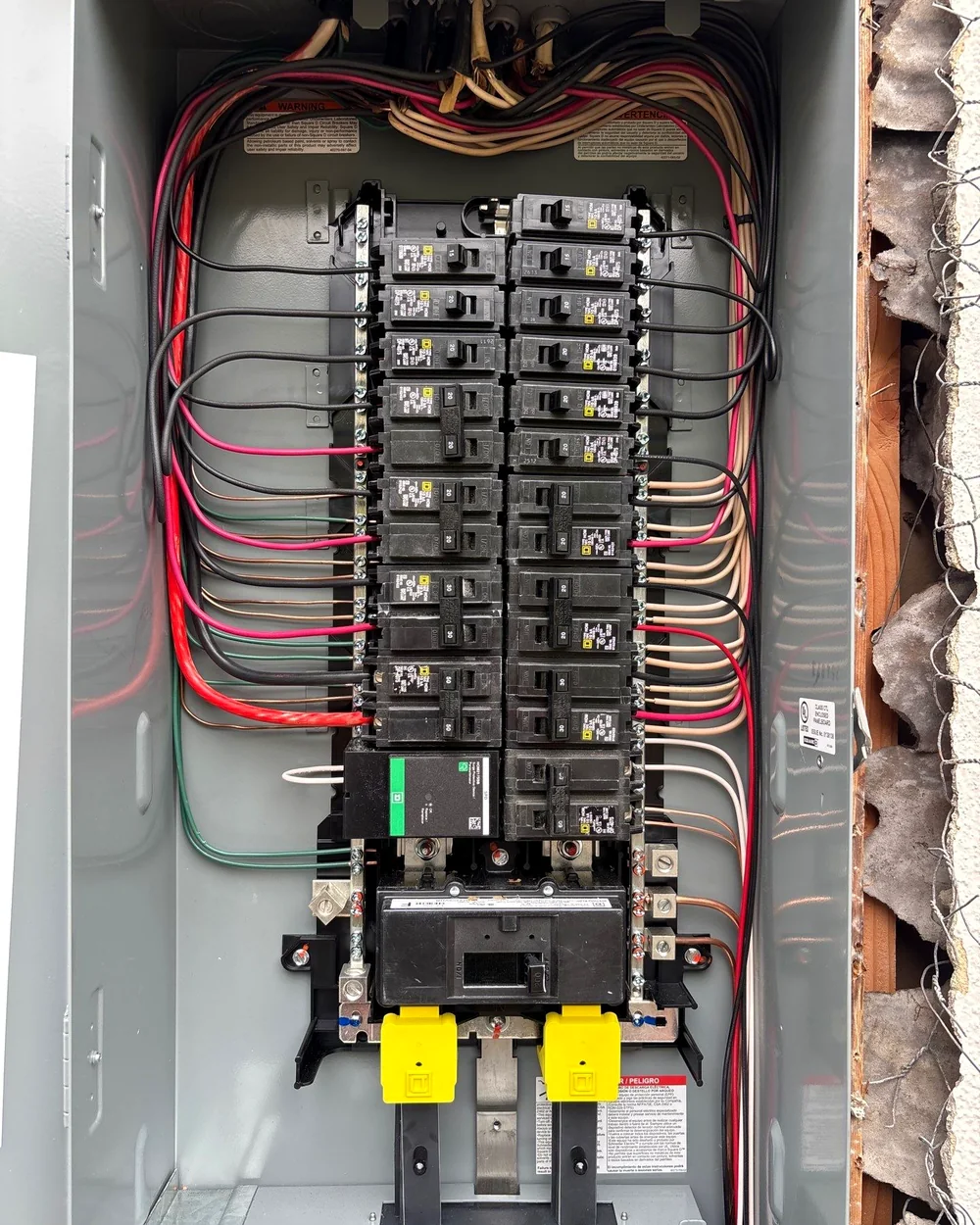
Yes. A building and electrical permit is legally required for any main service panel replacement or service upgrade in California, and that holds in every South Orange County city. There is no "minor work" exemption that lets you swap a panel without one. The state's building permit law (California Health and Safety Code) says no one may construct or alter a building without first getting a written permit, and panel replacement sits squarely on the work-requiring-a-permit list.
The standard your new panel has to meet is the California Electrical Code, Part 3 of the state's Title 24 building standards. The 2025 California Electrical Code took effect January 1, 2026, and is built on the 2023 National Electrical Code (the NFPA 70 standard). Your panel has to be installed to current code, and the inspection is how the city confirms it.
We hear the same misconception a lot, that it is just swapping a box so no permit is needed. That is false in Aliso Viejo, Mission Viejo, Lake Forest, San Clemente, and everywhere else down here. The permit is not red tape. It forces a licensed third-party inspection that protects your home, your insurance policy, and your resale value. We are The Panel Pros, the panel-only division of All Thingz Electric, and we pull that permit for you on every job.
Who Pulls the Permit, You or the Electrician
In almost every case a licensed C-10 electrical contractor pulls the permit, does the work, schedules the inspection, and coordinates the utility. The C-10 is California's electrical contractor license, issued by the Contractors State License Board (the CSLB). One party owns the whole process and stands behind the work.
Can a homeowner legally swap their own panel
There is a narrow owner-builder exception. California's Business and Professions Code lets an owner do work on their own principal residence if they personally do or supervise it and the property is not intended for sale, generally meaning they live there and are not selling within about a year. The owner signs an owner-builder declaration in person and takes on full liability. A few honest caveats:
- The owner-builder route does not waive the permit or the inspection. You still pull a permit, pass inspection, and meet current code.
- Many South OC building departments will not let a homeowner pull the electrical permit for a service-panel swap as an owner-builder, or they scrutinize it heavily, because of the danger and the utility coordination involved. Practice varies by city, so verify with your local department.
- Hiring an unlicensed handyman is illegal. Anyone doing this work for pay needs a contractor's license, and work over $500 in labor and materials by an unlicensed person is unlawful in California. The handyman cannot pull the permit, and the install will not pass.
So the cheaper-handyman idea costs more than it saves. It creates disclosure and insurance liability, and you end up redoing it correctly anyway. For a live service panel, let a licensed contractor carry the permit and the risk.
Book a free on-site assessment. We give you a straight answer and a flat-rate price in writing, with no obligation.
What the Electrical Permit Costs Across South OC Cities
The permit itself is modest, usually around $50 to $250, and it is a small line item compared to the job. Cities set their fees by project valuation, so the number depends on the panel size and your city. We confirm it when we pull the permit, so you are never guessing.
For a concrete example, Mission Viejo's electrical-work permit fees commonly fall in roughly the $45 to $180 range, with processing that often runs about two weeks. Treat that as illustrative, not a guaranteed quote. We do not publish exact fees for every city, because Lake Forest, Aliso Viejo, Dana Point, San Clemente, and the rest each maintain their own current fee schedules.
One jurisdiction note for South OC. Incorporated cities issue their own permits. The unincorporated communities, like Coto de Caza, Ladera Ranch, and Rancho Mission Viejo, are permitted through OC Public Works instead. We handle the right office either way.
Keep the permit fee separate from the job in your head. A full South Orange County panel upgrade typically runs about $3,500 to $5,500, and higher for 200A and above, mast or underground reroutes, or long conduit runs. The permit is a small charge on top. For a deeper look, see our breakdown of panel upgrade cost in Orange County.
The Permit, Install, Inspection, and SCE Sequence
Here is how a panel swap actually runs. The utility step is locked down by law, so this is the part homeowners cannot piece together on their own.
- Permit issued. We apply to the city, usually through an online portal, with the service amperage and equipment specs. The city issues the permit.
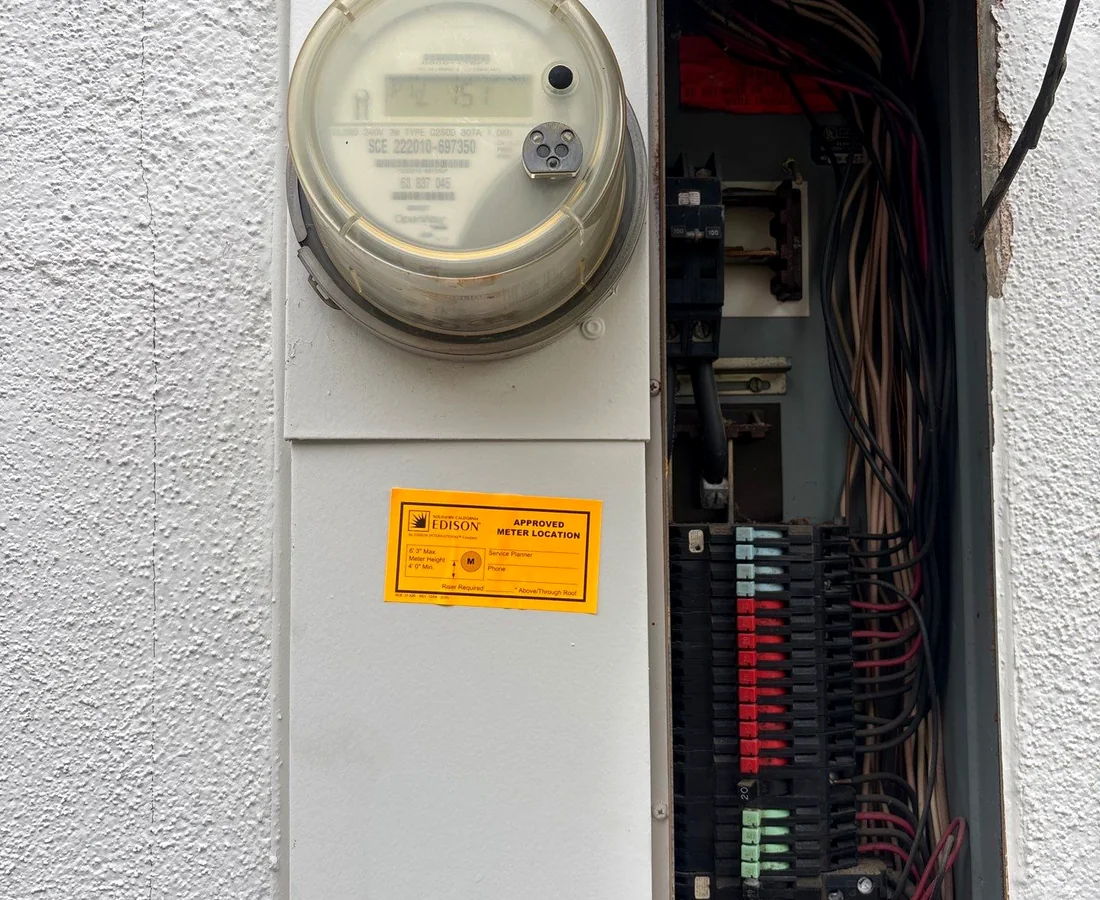
- Schedule the SCE disconnect. We call Southern California Edison to schedule a service disconnect, often timed to the same day as the inspection. Only SCE may pull the meter or break the seal.
- SCE de-energizes. Edison pulls the meter, typically the morning of the work day, so the panel is dead before we open it.
- Panel swap. Our C-10 removes the old panel and installs the new listed one, with proper grounding and bonding, breakers, and labeling.
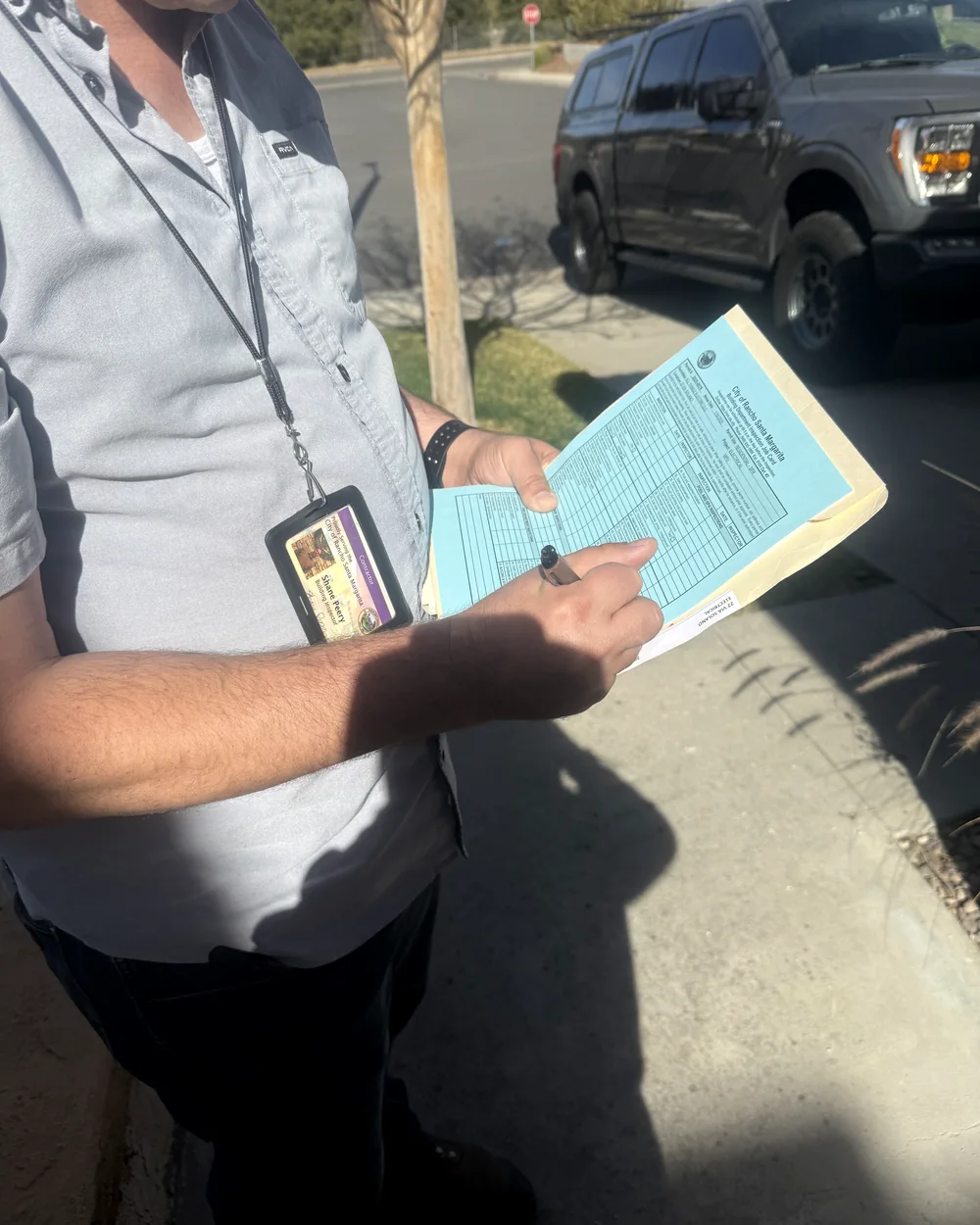
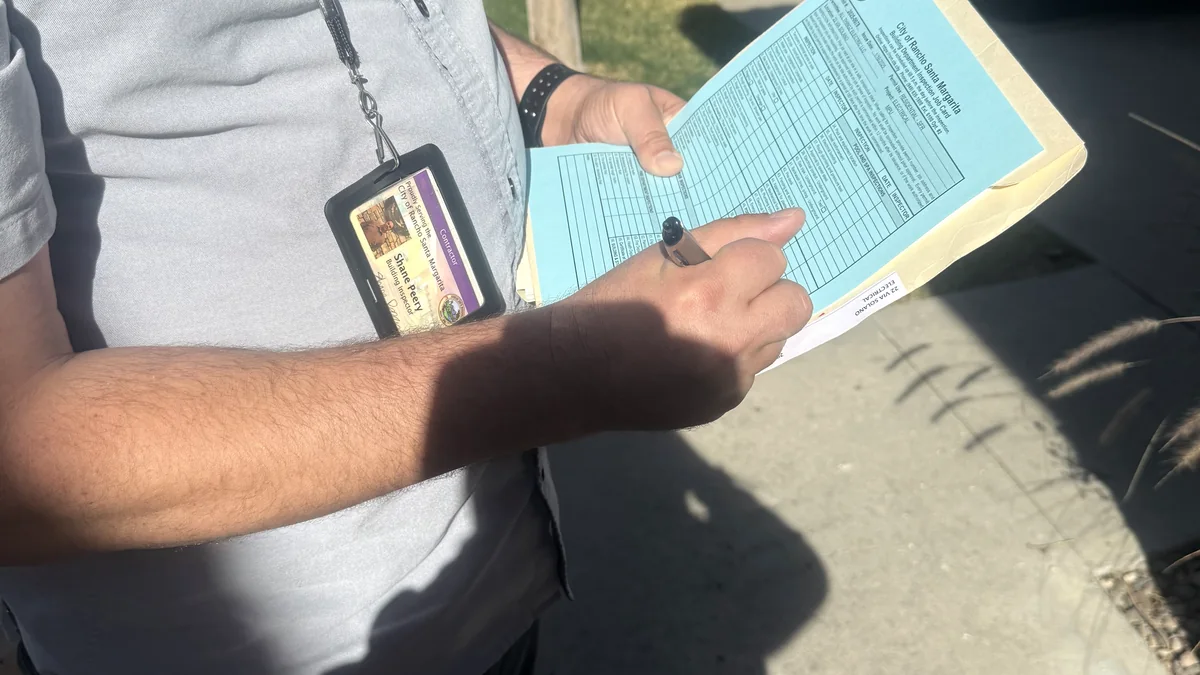
- City inspection. The inspector visits, often that same afternoon, and signs off the job card.
- SCE re-energizes. After the city passes the work and clears the utility, SCE reconnects the meter and restores power, often by that evening for a like-for-like upgrade.
It is illegal for a homeowner, and even for the electrician, to cut SCE's meter seal or pull the meter. That is meter tampering. SCE handles every disconnect and reconnect, which is a big reason to use a licensed contractor. Plan to be without power for part of the work day during the swap.
What the Inspector Actually Checks, and What Fails
The inspector verifies the install meets the current California Electrical Code and confirms the panel is safe and built right. The main items they look at:
- Grounding and bonding. Proper grounding electrode system (ground rods, a Ufer connection, or a water-pipe bond), the neutral and ground bonded only at the service, and equipment grounding intact. This is the most common fail area.
- Correct breaker listing. Breakers listed for that specific panel, no mismatched breakers, and proper wire-to-breaker sizing.
- AFCI and GFCI protection. Arc-fault and ground-fault protection on the circuits the code requires, and the inspector may push the test buttons.
- Working clearance. Required clear space in front of the panel, generally about 30 inches wide and 36 inches deep, with the panel not blocked or in a prohibited spot like a bathroom or a clothes closet.
- Labeling. A clear circuit directory so every breaker is identified and circuits can be shut off fast.
- Wiring method. The service entrance done correctly, proper weatherproofing, no open knockouts, and covers in place.
- Surge protection. Current code requires a surge protective device on dwelling service replacements, and the inspector confirms it.
- Mounting. Secure mounting, no damage or corrosion, correct height, proper drip loops, and the right mast clearance.
The common fail causes line up with that list. Improper grounding and bonding, missing AFCI or GFCI, no surge device, blocked working clearance, an unlabeled directory, open knockouts, double-tapped neutrals or grounds, and wrong breakers. A C-10 builds to every one of these so the job passes the first time. That matters down here, because coastal salt air near Laguna Beach speeds up corrosion on meter sockets and panel cans, so we spec corrosion-resistant equipment where it belongs.
The Resale and Insurance Fallout of an Unpermitted Panel
An unpermitted panel is cheap today and expensive later, and the bill almost always lands at the worst time. The risks are real.
You have to disclose it when you sell. California sellers must disclose all known unpermitted work on the Transfer Disclosure Statement, including work a prior owner did. Hiding it exposes you to lawsuits for years after the closing, and buyers have successfully sued over undisclosed unpermitted work.
It blows up deals in escrow. Unpermitted panel work routinely triggers escrow delays, renegotiation, price reductions, lender objections, or dead deals. A buyer's inspector or appraiser flags it, and now you are permitting a panel under deadline pressure.
Fixing it after the fact costs more. If it is discovered, you have to bring the panel up to the current California Electrical Code, not the older code in force when the work was done, and you may have to open walls to expose the work for inspection. Some jurisdictions also charge investigation or doubled permit fees as a penalty for working without a permit.
It can wreck an insurance claim. An unpermitted, uninspected, non-code panel can lead an insurer to deny a claim, especially on a fire or electrical loss, and it can drive up your premium or get the policy cancelled. A permitted, inspected upgrade is the paper trail that protects your coverage. If your carrier has flagged your panel, that is a reason to act, and the same logic applies to the known-hazard equipment in our guide on the signs your electrical panel is failing.
So the math is simple. The permit runs around $50 to $250. The cost of getting caught later, the retroactive permit, the rework, a denied insurance claim, and the escrow fallout, runs far higher. We pull the city permit, coordinate the SCE meter disconnect and reconnect, and build to current code so you are left with documented, inspected, insurance-safe work across South Orange County. See the cities we serve and our reviews, and book a free assessment. We deal with Edison so you do not have to.