What California insurers actually require
There is no statewide law that lists an approved electrical panel, so when people ask what California requires, the honest answer is that the requirement comes from your insurer, not the state. Over the last few years carriers writing homeowner policies in California have tightened what they will accept, and the electrical panel has quietly become one of the line items an underwriter checks. A home with a modern, properly grounded panel rarely gets a second look. A home with a recalled or obsolete panel increasingly does.
In practice the requirement shows up in one of three ways. An underwriter requests a four-point style inspection before binding a new policy and the panel is one of the four points. An inspection during the policy term flags the panel and the carrier asks you to replace it to stay covered. Or a renewal arrives with a condition attached, replace the panel by a date or the policy will not renew. None of that is the state talking. It is the carrier deciding the panel is a risk it no longer wants to carry.
Which panels insurers flag
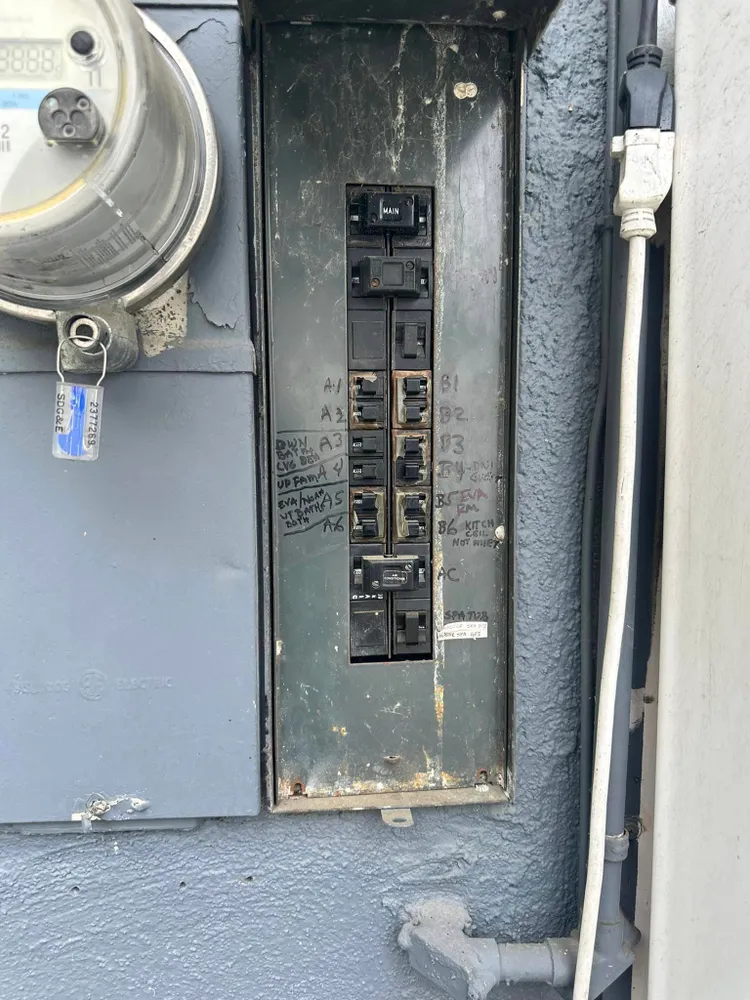
The names come up again and again. Federal Pacific Electric (the Stab-Lok line), Zinsco, and Challenger are the panels underwriters flag most often, and they are common in Orange County homes built from the 1950s through the 1980s. Very old fuse boxes and undersized 60-amp services draw scrutiny too, both because they signal an outdated system and because they often cannot safely carry a modern home's load.
If you are not sure what you have, the brand is usually printed on the panel door or the dead front inside. We keep dedicated pages on the two most-flagged brands, with photos that make them easy to identify, at Federal Pacific replacement and Zinsco replacement. If you can read the label, you can usually tell in a minute whether your panel is one an insurer will object to.
Why these panels fail underwriting
The reason is not paperwork, it is physics. A breaker has one job that matters most, which is to trip and cut power when a circuit draws too much or shorts out. The flagged panels have a documented history of breakers that can fail to do that, so a fault that should have flipped a breaker can instead keep heating a wire. That is the chain of events behind an electrical fire, and it is why these panels are treated as a fire risk rather than a cosmetic problem.
It is worth being precise about one thing, because homeowners hear it wrong all the time. These panels were never formally recalled, and the absence of a recall is exactly why the responsibility lands on you and your insurer rather than the manufacturer. For the deeper history, including the testing and the court findings, see our full explainer on why insurers keep flagging Federal Pacific and Zinsco panels.
Non-renewal, conditional renewal, and your deadline
If a carrier flags your panel, the notice you get usually falls into one of two buckets, and the difference matters. A conditional renewal keeps you covered but attaches a requirement, replace the panel by a stated date. A non-renewal ends the policy at the term, and the panel may be the cited reason. Either way there is a clock, and the clock is the part homeowners underestimate.
The reason the deadline bites in California is the broader market. Carriers have pulled back from large parts of the state, so shopping your way out of a panel problem is harder than it used to be, and the state FAIR Plan that exists as a last resort is more expensive and thinner on coverage than a standard policy. Replacing the panel and proving it is almost always cheaper and cleaner than losing the policy and trying to replace the coverage. If you are already past a notice, our page on what to do when an insurer flags your panel walks through the moves in order.
What to do as a homeowner
Start by reading the notice and pulling the exact requirement and the date, because the scope of the fix should match what the underwriter actually asked for. Then get the panel looked at by someone who does this for a living, so the quote reflects your real service rather than a guess. In most cases the fix is a straightforward panel replacement, and where the home is also undersized it is folded into a full panel upgrade that brings the whole service up to code at the same time.
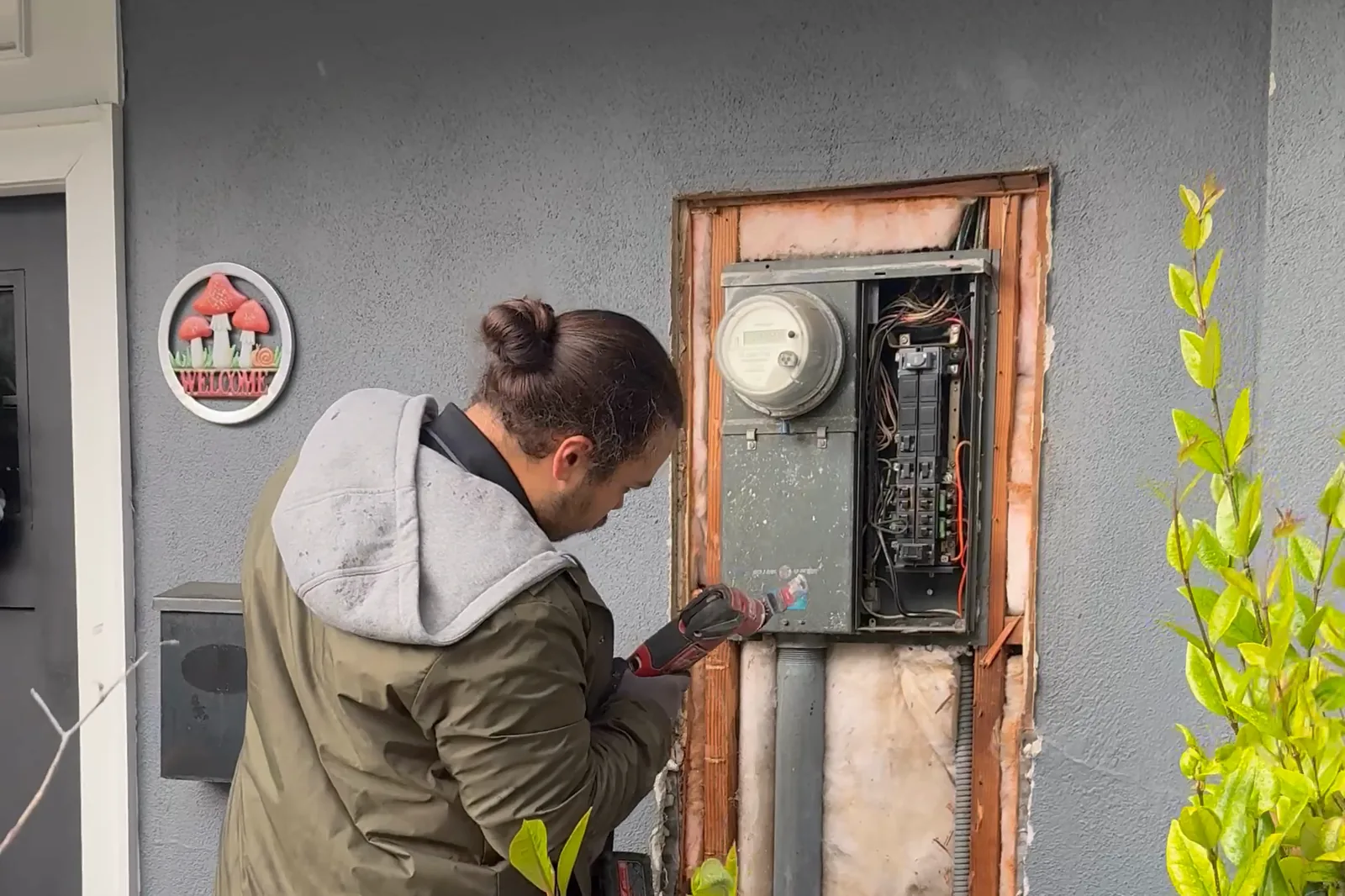
The practical part most homeowners dread is the permit and the utility coordination, and that is the part a licensed contractor takes off your plate. The work is permitted and inspected by the city, the Southern California Edison meter release is scheduled rather than improvised, and most standard installs are finished in a single day. What you are left holding at the end is the thing the carrier wants, which we cover next.
What condo owners and HOAs face
In a condo or a townhome the same panel can put two policies at risk at once, your own HO-6 policy and the community's master policy. That makes it more than a personal decision, because the carrier behind the master policy is looking at the whole community, and a building full of recalled panels is a community-level exposure. When a board gets a non-renewal notice that names the panels, replacing them across the community is usually the only thing that keeps the master policy in force.
If it is just your unit, our page on condo and townhome panel upgrades covers the parts a shared building adds, like meter stacks and HOA approval. If the panels are failing across the whole community, the board should look at the HOA insurance compliance program, which replaces the flagged panels community-wide and documents every unit for the carrier. Rental buildings face the same pressure from insurers and lenders, which our apartment and multifamily program handles unit by unit.
The documentation that keeps coverage in force
Replacing the panel is only half the job. The other half is proof, because an underwriter is not standing in your garage and will only act on what is in the file. The documentation that satisfies a carrier is straightforward, the panel make and model that was installed, the city permit, and the signed-off final inspection that says the work met code. Those three things together are what let a carrier close the file and keep your policy in force.
This is also why a permitted, inspected job matters even when an unpermitted swap looks cheaper. The permit and the inspection are not red tape, they are the third-party record the insurer relies on. For a community the same record is produced unit by unit and handed to the board as a single package for the carrier. If you have a notice in hand or a renewal date approaching, the fastest path is a free assessment so you know the real scope and the real number, with the paperwork handled from start to finish.