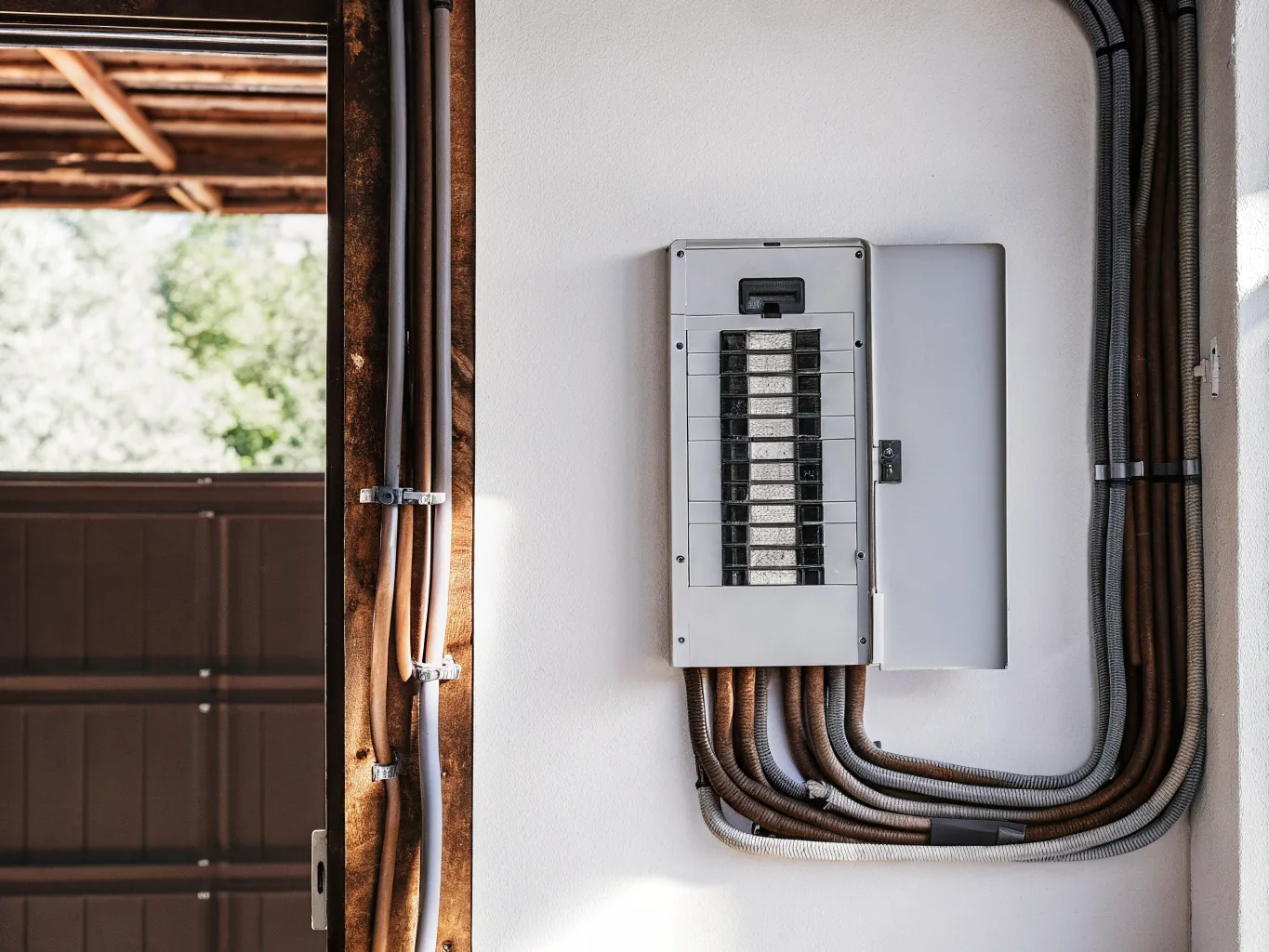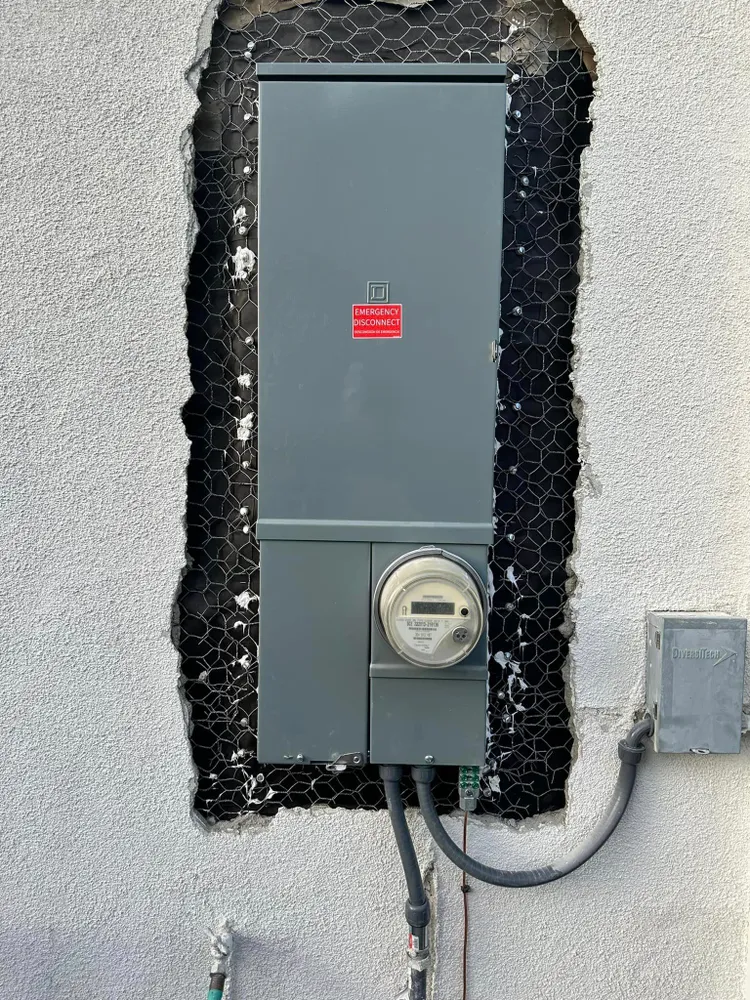
A Trip Is the Safety System Working
When a breaker trips, it is doing exactly what it was built to do, which is cut power before the wire behind your walls can overheat and start a fire. So a breaker that keeps tripping is not broken, and that is the part most homeowners get backward. The real questions are why it is tripping and whether the trouble is the breaker, the circuit, or the whole panel.
The dangerous version is the opposite of what you are seeing. A breaker that should trip and quietly fails to is far worse than one that trips often, because it lets a fault keep cooking the wire with no protection. Some older South Orange County homes still have panels like that. For now, treat every trip as a message, because once you know whether you have an overload, a short circuit, or a ground fault, you usually know whether you can handle it.
Overload, Short Circuit, and Ground Fault
Almost every trip comes down to one of three causes, and a standard breaker has two trip mechanisms that handle them.
Overload, which is too many amps for too long
An overload is the most common cause and the least dangerous. It happens when a circuit carries more current than it is rated for, like running a hair dryer, a space heater, and a microwave on one kitchen circuit at once. A bi-metal strip inside the breaker heats and bends until it trips, usually in seconds to minutes rather than instantly, so the tell is that it trips when you turn on one more thing. Most circuits are rated 15A or 20A, while big appliances get dedicated 30A to 50A circuits.
Short circuit, which is a hot wire touching where it should not
A short circuit is dangerous and trips differently. A hot wire contacts a neutral or another hot wire directly, creating a huge surge of current with almost no resistance, and the magnetic half of the breaker yanks the contacts open instantly. If a breaker trips the moment you reset it, especially with a pop, spark, buzzing, scorch mark, or burnt-plastic smell, that short circuit is telling you to stop. A burning odor at the panel is its own emergency, which we cover in our guide on a burning smell coming from your electrical panel.
Ground fault, which is electricity leaking where it should not
A ground fault is also dangerous, with a shock risk attached. Current escapes its intended path and reaches ground, a grounded metal box, water, or a person, and a GFCI catches it at a tiny leakage of about 5 milliamps to prevent electrocution. Code requires this protection in wet and damp areas like kitchens, bathrooms, garages, laundry rooms, and outdoors, so the tell is a trip after rain or near water.
An instant trip the second you reset points to a short circuit. A delayed trip under heavy load points to an overload. A trip near water points to a ground fault. Homeowners call every trip a short circuit, but knowing which one you have is the difference between fine and a real hazard.
Book a free on-site assessment. We give you a straight answer and a flat-rate price in writing, with no obligation.
How to Reset a Breaker the Right Way
You can safely reset a breaker yourself, as long as you stick to flipping the handle and never open the panel cover. The whole process is three steps.
- Reduce the load first. Unplug or switch off everything on the dead circuit, especially heat-makers like space heaters, hair dryers, and microwaves that pull the most current.
- Reset it correctly. A tripped handle sits in the middle position, partway between ON and OFF, and that stuck-middle look is the signature of a trip. Push the handle firmly to full OFF, pause two or three seconds, then push it to ON. Many breakers have an internal latch that only re-arms from the OFF position, so they will not reset if you skip the full-OFF step.
- Find the culprit. If the breaker holds with everything off, plug your devices back in one at a time. The item that trips it again is your overloaded circuit or a faulty appliance, and a bad appliance is far cheaper to fix than anything inside the wall.
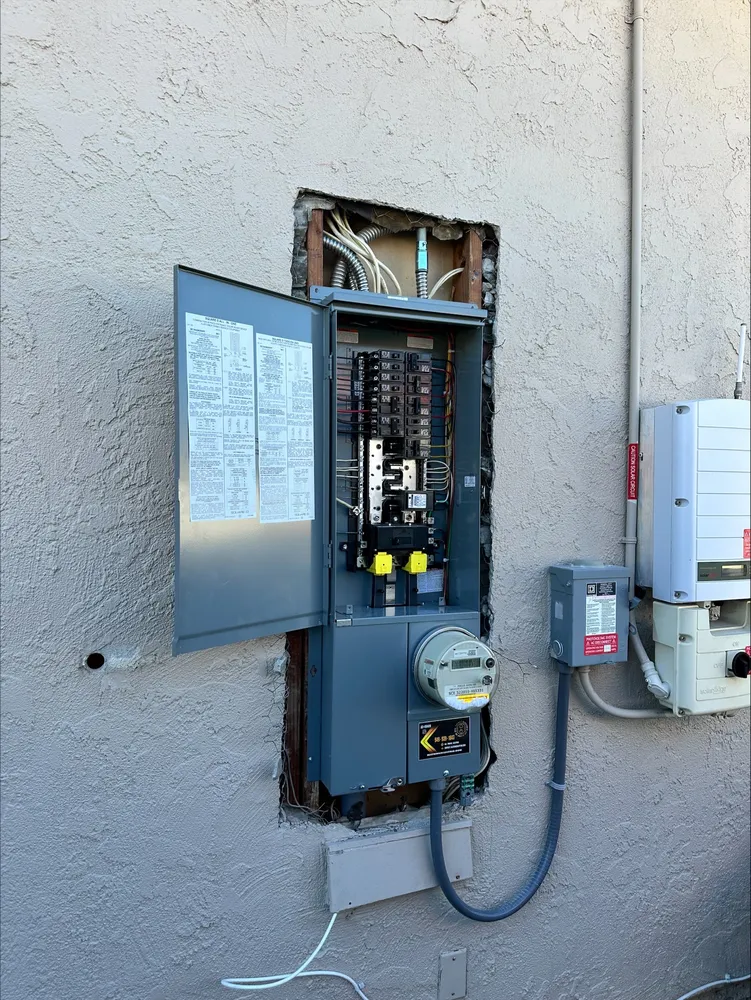
Flipping handles and unplugging loads is the full extent of safe homeowner troubleshooting. Removing the panel cover, touching a bus bar, or swapping a breaker is live-panel work for a licensed electrician.
When It Trips With Nothing Plugged In
If a breaker trips with nothing plugged in, the load is not the problem, which means the wiring or the breaker itself is. You have already ruled out the easy explanation, so something hidden needs a professional.
Common causes include a ground fault or short inside the wall from damaged insulation, a failing in-wall outlet or fixture, or moisture getting in near the coast. Rodents chewing wiring in older attics cause it too, more often here than people expect. The breaker can also be worn out, or an AFCI or GFCI may be catching a real fault on something wired permanently into the circuit. None of this is a do-it-yourself fix beyond confirming the circuit is truly empty.
Bad Breaker or Failing Panel
This is where the cost swings from a couple hundred dollars to a few thousand. There are two failure layers with very different fixes.
When the breaker itself has gone bad
Breakers are mechanical, and they wear out after enough trip-and-reset cycles. A worn breaker trips at loads well below its rating, because the thermal element develops a memory and trips on less heat each time. It may also refuse to reset or stay on even with the circuit unloaded and known good, or feel warm at light load. The fix is swapping that single breaker, roughly in the low hundreds installed, and it must be the same brand and type rated for your panel, since a mismatched breaker is a code violation and a fire risk.
When the panel is the real problem
Sometimes the breaker is fine and the panel is the issue, which shows up in three patterns.
The first is an undersized or maxed-out service. Several breakers trip under normal use, lights dim when the AC or EV charger kicks on, and the panel is full with no open slots, which pushes some people toward unsafe tandem breakers. A 60A or 100A panel often cannot carry a modern home, so the fix is a service upgrade, usually to 200-amp.
The second is a breaker that runs constantly hot, especially with a buzzing or crackling sound, which usually means a loose or corroded connection to the bus bar. Resistance at that joint makes heat, heat makes arcing, and the cycle feeds itself until it can start a panel fire. This is a panel repair, not a breaker swap, so shut off the main and call us.
The third is the most dangerous, a known-defective Federal Pacific Electric (FPE) Stab-Lok or Zinsco panel. This is the inverted failure, where the breaker fails to trip when it should and the circuit overheats with no protection. Independent testing tied FPE Stab-Lok breakers to failure-to-trip rates commonly cited around 25 percent and much higher under certain conditions, and a New Jersey court ruled the breakers were fraudulently labeled as meeting UL safety standards. Zinsco breakers can fuse to the bus bar and keep passing power during a fault. Both stopped being made decades ago, but millions remain in older Southern California homes. Spot one without opening anything by reading the panel door for Federal Pacific, FPE, Stab-Lok, Zinsco, or GTE-Sylvania. Electricians and insurers agree these panels should be replaced, and many carriers now drop coverage.
| Job | Typical range | South OC notes |
|---|---|---|
| Single breaker replacement | $150 to $400 installed | SoCal labor trends higher |
| Upgrade existing panel to 200A | $1,250 to $3,000 | More with rewire or relocation |
| Full panel replacement | $2,000 to $6,000 | Common local range runs higher |
| Panel relocation add-on | $500 to $1,000 | If the panel has to move |
These are national ranges to set expectations, not quotes. Final price depends on amperage, panel location, code-required upgrades like grounding and AFCI or GFCI protection, and permit and SCE coordination. A worn single breaker is hundreds of dollars, while undersized service, a hot loose connection, or an FPE or Zinsco panel runs into the thousands, and we tell you straight which one you have. See how we handle written pricing on our pricing page.
Why So Many South OC Panels Get Maxed Out
Chronic tripping is especially common here because of when our homes were built. Much of South Orange County went up in the 1960s through the 1980s, in tracts across Mission Viejo, Laguna Niguel, San Juan Capistrano, San Clemente, Dana Point, and Lake Forest, with 100A or even 60A service sized for that era's appliances. That undersized service is now the number one driver of breakers that keep tripping as families add modern loads.
The electrification wave makes it sharper. A single Level 2 EV charger runs a 40A to 60A circuit at 240 volts on its own, and pairing that with a heat pump frequently exceeds what a 100A panel can safely carry. That is the moment my breaker keeps tripping turns into my panel is maxed out, and plenty of FPE and Zinsco panels of this vintage are still in service too. If you are weighing whether your home has outgrown its service, our piece on whether your South OC home needs a 200-amp panel walks through it.
When to Stop Resetting and Call Us
Resetting a breaker once is fine. If it holds, you simply overloaded the circuit and you are done. The stop line matters most, because forcing a breaker back on against a real fault turns a small problem into a fire.
Stop and call a licensed electrician if the breaker trips the instant you reset it, trips again under the same load after you reduced it, or is warm to the touch, buzzing, sparking, smells like burning plastic, or shows scorch marks. A breaker that trips immediately is reporting a genuine fault every time, and each forced reset risks arc flash, melted insulation, and fire. And never install a bigger breaker to stop the tripping, because upsizing it beyond the wire's rating removes the wire's fire protection. The right fix is reducing the load, repairing the fault, or upgrading the circuit or panel.
We are The Panel Pros, the panel-only division of All Thingz Electric, and panels are all we do for homeowners across South Orange County. We are family-owned and C-10 licensed (CSLB #1084610), insured and bonded. If your breaker keeps tripping, runs hot, or you spot an FPE or Zinsco label, book a free on-site assessment and we will tell you honestly whether it is a roughly $200 breaker or a panel putting your home at risk. When an upgrade is the answer, we quote a flat rate in writing first and finish most 200-amp upgrades in a single day, permit included.