
Rust or Corrosion in Your Electrical Panel
Salt-air rust inside a panel is a structural failure of the metal that carries your power, so once it reaches the bus bars or breakers the safe fix is a full replacement, not a cleaning.
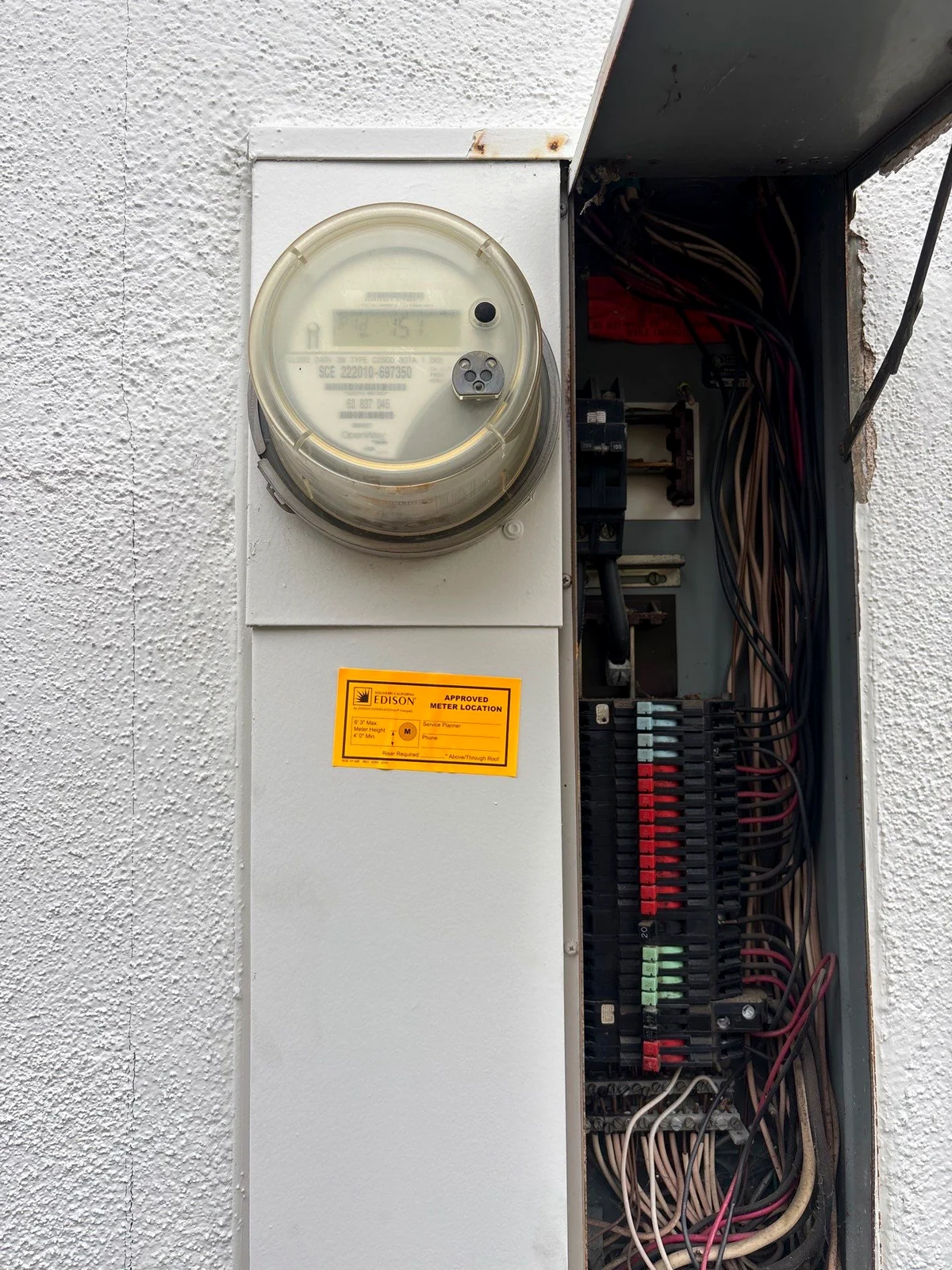
How Serious Is a Rusted Electrical Panel?
Corrosion on the bus bars, lugs, or breaker contacts builds heat at the connections and can stop a breaker from tripping, which is how a corroded coastal panel becomes a fire risk, so do not wait this one out.
What to Do Right Now
- Look at the cover without opening it. Surface rust on the outside of the cabinet only, with no symptoms, is worth a look but is less urgent than what is inside.
- Treat anything inside the panel as a call-now item. White powder, green deposits, rust streaks, pitting, water staining, a warm cover, a burning smell, or buzzing all mean stop and call us.
- Do not try to scrub, sand, or spray the corrosion off. Cleaning a plated bus bar strips the protective plating and the metal corrodes back faster than before.
- If you smell burning or the cover feels hot, shut off the main if you can reach it safely, leave it off, and call us at (949) 799-2034.
- Do not open the panel cover to investigate. A live, corroded panel is the last place to go poking around.
Why Coastal Panels Rust and Corrode
This is a coastal problem, and it is driven by salt. Ocean air carries fine salt aerosols that settle on metal and form a thin saline film, and that film pulls moisture out of the humid air and keeps the metal wet. The result is faster oxidation and galvanic corrosion wherever two different metals meet, like copper or aluminum lugs sitting against a steel enclosure. Salt air can corrode metal roughly ten times faster than dry inland air, which is why panels in coastal South OC fail on a clock that inland homes never see.
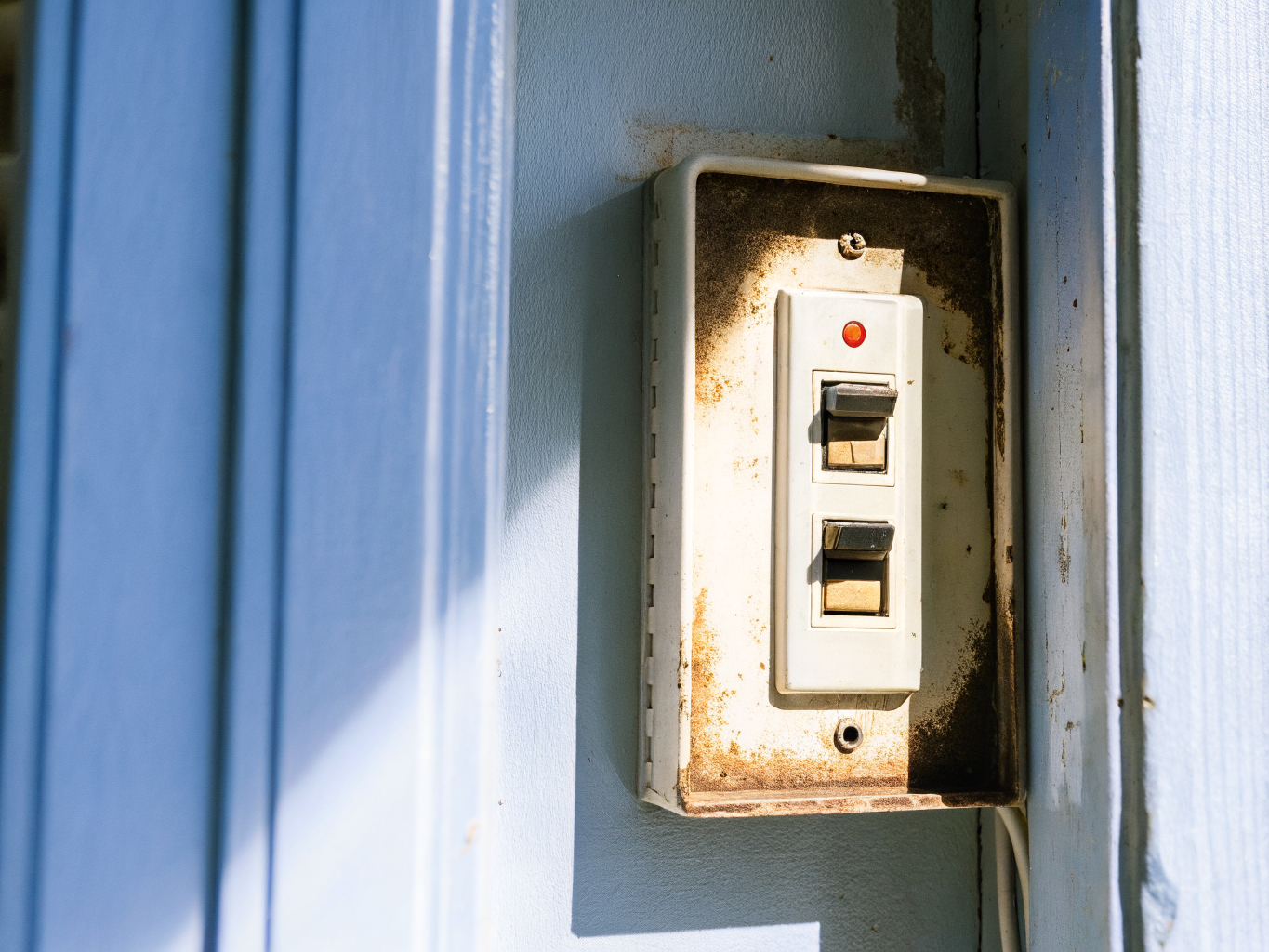
The risk is highest within about a mile of the ocean, but downwind conditions can carry salt three to five miles or more inland, so this is not only a beachfront issue. Outdoor, Edison-fed meter-main panels in Laguna Beach, Dana Point, Newport Beach, and San Clemente sit right in the worst of it, because the enclosure is exposed to that salt film directly. The visual fingerprints are easy to learn. White powdery residue is aluminum corroding, greenish deposits are copper corroding, and rust streaks are the steel failing. For the broader picture of how panels go bad, our guide to the warning signs your panel is failing walks through what to watch for.
Book a free on-site assessment. We give you a flat-rate price in writing, with no obligation.
When It's the Panel and When It's Not
Here is the honest line on when corrosion is cosmetic and when it is not. Light surface rust on the outside of the door or cabinet only, with nothing inside, no powder on the bus or breakers, and no electrical symptoms, is often something to monitor rather than replace today. Even then it is worth a professional look, because exterior rust is a sign you are in a high-corrosion microclimate and it often hides damage on the inside.
It becomes a real replacement when the corrosion is inside the panel. Rust, pitting, or powder on the bus bars, the breaker contacts, or the neutral and ground bus is a replace condition, and so is water intrusion paired with any corrosion at all. The reason it is not a cleaning job comes down to how the parts are built. Bus bars are plated, usually tin over copper or aluminum, and scrubbing the corrosion off also removes that protective plating, which leaves bare metal that corrodes faster and fails sooner. Code also does not allow current-carrying parts that are deteriorated by corrosion to a degree that affects safe operation or mechanical strength. By the time corrosion shows on the bus or the breakers, the damage is internal and progressive, so a clean-and-tighten buys very little time and reintroduces the same failure. Replacement with a new, properly rated panel is the defensible fix, and it is the natural moment to move a coastal home up to modern 200-amp service.
How The Panel Pros Fix a Corroded Panel
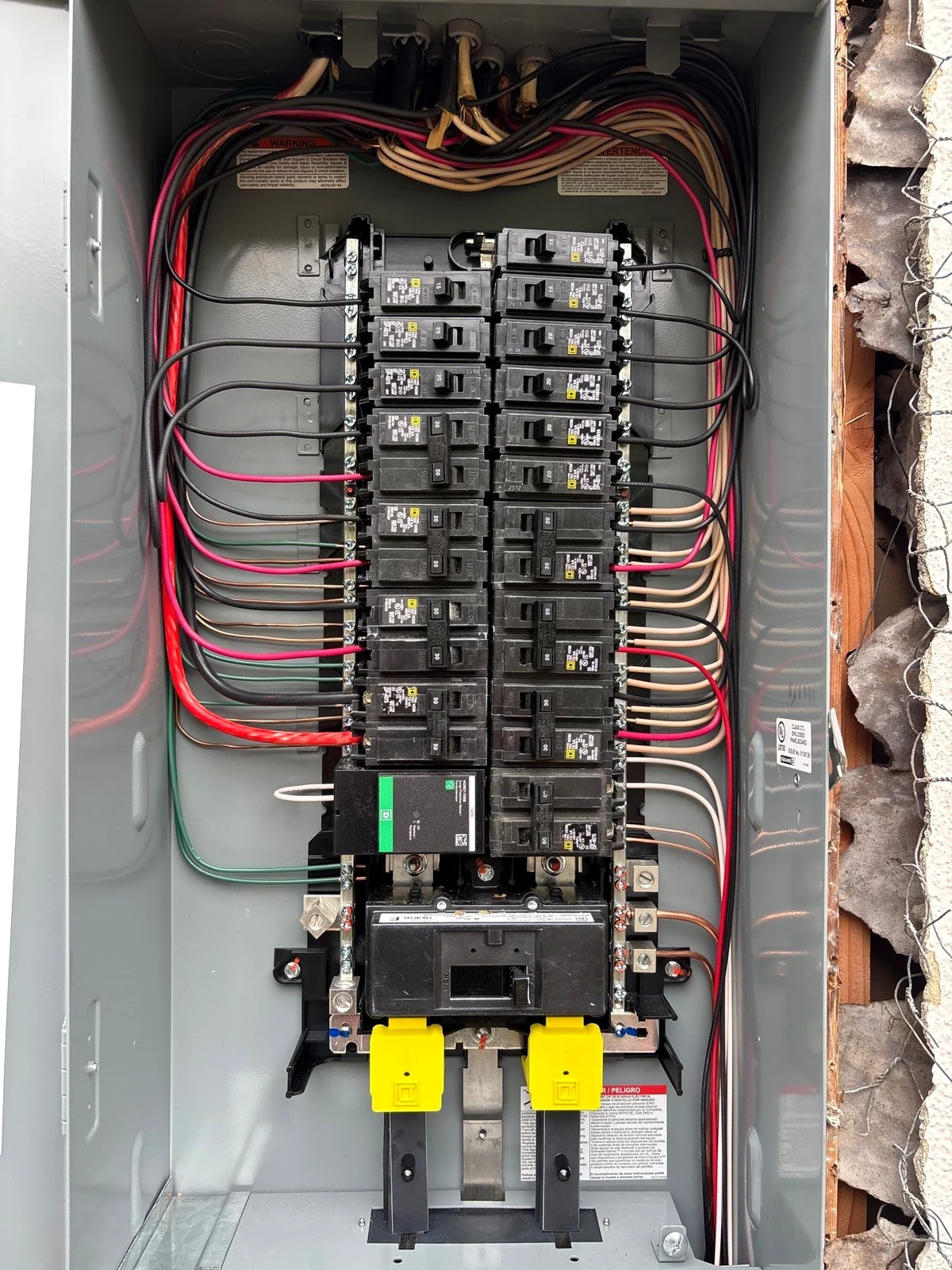
When the corrosion is inside the panel, we replace it with a new, code-compliant unit, then we permit and inspect the work so you have documented proof it was done right. Corrosion does three bad things to a panel, and a new panel undoes all three. It builds resistance and heat at the lugs and bus connections, it lets current arc across the gaps that open up, and it can invade a breaker mechanism so the one device meant to cut power on a fault fails to trip. A fresh, properly bonded panel restores low-resistance connections, a clean ground path, and breakers that actually do their job. Routing this through a licensed panel replacement is what makes the work hold up.
Here is how the job runs. We pull the electrical permit with your city, whether that is Laguna Beach, Dana Point, Newport Beach, San Clemente, or an unincorporated area handled by the County. We schedule the work, swap the panel, then call in the city inspection and meet the inspector so you get a final sign-off. Most standard 200-amp replacements are done in a single day, with power back on the same day. Panels are the only thing we do, so this is not a sideline for us.
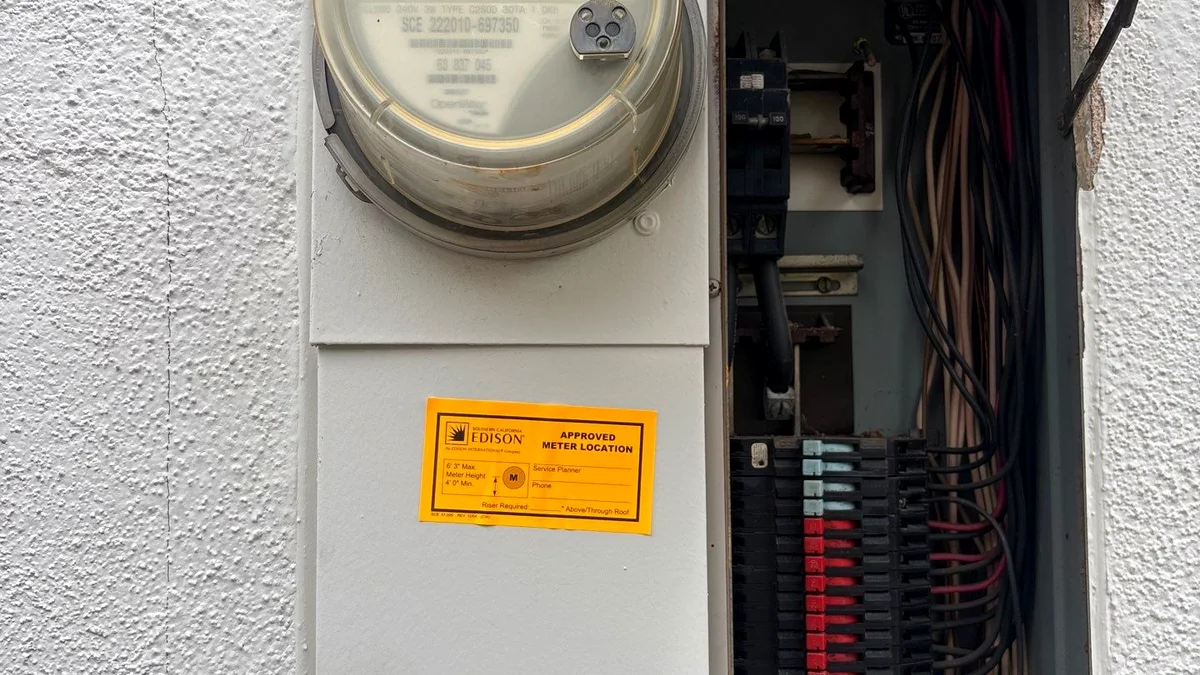
One detail on the Edison side, because coastal homeowners find it confusing. A panel swap means the power has to come off at the meter, and only Southern California Edison can authorize that. Edison's current process generally requires you, the account holder, to request the disconnect and reconnect rather than the contractor, and the Edison line for that is 1-800-655-4555. We set the timing, tell you exactly when to make that one account-level call, and coordinate the rest so the disconnect, the swap, the inspection, and the reconnect line up cleanly.
What the Fix Costs
Coastal panel replacement covers a wide range because every panel, every service entrance, and every home is different, and salt damage often reaches past the panel into the service hardware. The only number that means anything is the free flat-rate quote we put in writing after we see your setup, so there are no surprises.
- Amperage target, since moving 100A up to 200A is standard and 400-amp service costs more
- A full meter-main versus a sub-panel, and how much of the service entrance the salt has reached
- Condition of the service mast, riser, weatherhead, and grounding and bonding brought to current code
- Whether the meter socket or meter-main combo also needs replacing from corrosion
- Permit and inspection fees, which vary by city across South Orange County
- Southern California Edison disconnect and reconnect coordination at the meter
- Any panel relocation, plus the drywall or stucco patching that comes with it
CSLB #1084610
panels are all we do
from South OC homeowners
SCE territory specialists
Frequently Asked Questions
Can you just clean the rust off my electrical panel instead of replacing it
Not safely, once the corrosion is inside. The bus bars are plated, usually tin over copper or aluminum, and scrubbing the corrosion off also strips that protective plating, which leaves bare metal that corrodes back faster and fails sooner. For a corroded residential panel the correct repair is to replace the corroded parts, and in most homes that means the whole panel. Light surface rust on the outside of the cabinet only is a different story, and we will tell you straight which one you have.
Why is corrosion actually dangerous and not just ugly
Because it degrades the three things a panel has to do. Corrosion builds up on the lugs and bus contacts and raises electrical resistance, which makes heat at the connection, which loosens the joint, which makes more heat, a runaway loop that ends in scorched lugs or worse. As connections deteriorate, current can arc across the gaps, and arc faults reach extreme temperatures. Salt and rust can also invade a breaker so it fails to trip on an overload or a short, and corrosion on the neutral and ground bus weakens the safety ground path. None of that is cosmetic.
How do I know if my coastal panel corrosion is urgent or just surface rust
Look at where it is. Light rust on the outside of the door or cabinet only, with no powder inside and no electrical symptoms, is usually a monitor-and-evaluate situation. It turns urgent when the rust, pitting, or white and green powder is inside the panel on the bus bars, the breaker contacts, or the neutral and ground bus, or when you have water staining, a warm cover, a burning smell, buzzing, or breakers tripping for no clear reason. Water plus corrosion inside the cabinet is a replace-now condition.
I live a few miles from the ocean, is salt corrosion even a concern for me
It can be. Corrosion risk is highest within about a mile of the coast, but downwind salt air can carry three to five miles or more inland, so homes well back from the water still see it. Salt air corrodes metal roughly ten times faster than dry inland air, which is why outdoor Edison-fed panels across coastal South Orange County age faster than the same panel would inland. Send us a photo and we will tell you for free whether what you are seeing is a concern.
Does a corroded panel mean my breakers are not protecting me anymore
It can, and that is the part people miss. A breaker is a mechanical device, and salt and rust can get into the internals and seize the mechanism. A corroded breaker can fail to trip on an overload or a short, which means the one safety device that is supposed to cut power lets fault current keep flowing into the walls. Corrosion on the bus and lug connections also adds heat right where the breakers seat. Replacing the panel restores breakers that actually trip when they should.
Who handles the permit, the inspection, and the Edison meter on a coastal panel replacement
We handle almost all of it. We pull the electrical permit with your city, schedule the work, call in the inspection, and meet the inspector for the final sign-off. We also coordinate the Southern California Edison disconnect and reconnect around the job. Edison's current process generally has you, the account holder, place that disconnect request directly, so we tell you exactly when to make that one account-level call and manage the timing and paperwork around everything else.
Take the free Panel Health Check and see what your answers point to in about two minutes. No pressure, and you can text us a photo to verify what you have.